Moline Epoxy Flooring installs industrial epoxy flooring in Moline, IL, serving surrounding cities including Silvis, Milan, Rock Island, Campbell’s Island and Bettendorf. In more than 20 years of floor work, we have learned that an industrial floor is judged by how it handles the next forklift, the next spill and the next shift, so we build it around how the building actually runs.
Industrial floors take impact, abrasion, oil, coolant, cleaning chemicals and constant traffic. The right system protects the concrete, makes the space easier to clean and safer to work in, and gives a brighter surface that reflects light across the plant.
Every proposal lists the system, the thickness, the joint work, the striping and a phasing plan tied to your shifts. That way the floor can be checked against what was promised, and production can plan around dates that are written down.
Industrial Spaces We Coat
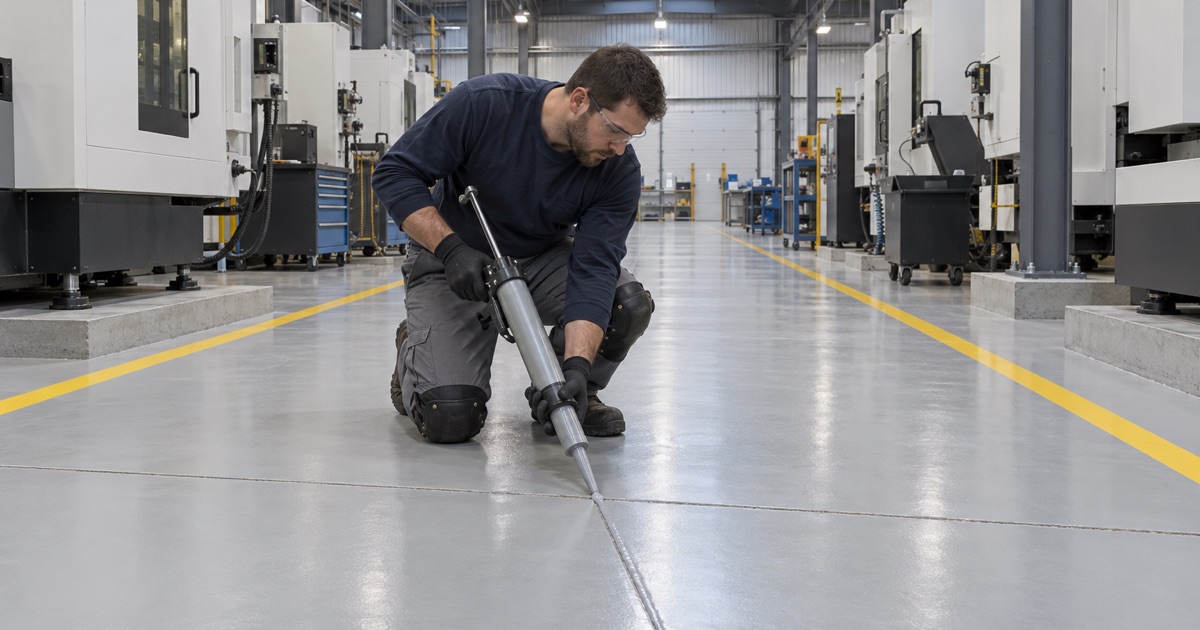
Machine Shops and Fabrication Areas
Machine shops see oil, coolant, cutting fluid, metal chips and dropped parts every day. A thick epoxy system with a chemical-resistant topcoat stands up to that use and makes spills and small parts easy to see.
Older shop floors often hold years of oil below the surface. We test and clean those areas before coating, because oil that keeps rising out of the slab can lift a coating from below.
Equipment and Assembly Plants
Moline has a long manufacturing history. John Deere’s Seeding factory on River Drive has built planting equipment at its current location since 1879, and the area is full of plants and suppliers with large, busy slabs that see heavy equipment every day.
Assembly areas need floors that handle carts, tuggers and dropped tools, with marked aisles and work zones. We phase these jobs around production and use fast-curing materials where a section needs to reopen quickly.
Warehouses and Distribution Floors
Warehouse floors take forklift and pallet jack traffic all day. The coating needs to resist abrasion, and the joints need to be rebuilt so hard wheels do not chip their edges. Striped aisles, staging lanes and pedestrian walkways become part of the coating system, so the markings wear with the floor instead of peeling like tape.
Systems for Industrial Floors
High-Build Epoxy
A high-build 100% solids epoxy goes on thick in each coat and bonds well to a shot blasted or ground slab. It suits many light and medium industrial areas and can be topped with a polyurethane or polyaspartic for added chemical and abrasion resistance.
A light-colored high-build floor also brightens a plant. Gray and beige coatings reflect more light than bare concrete, which helps workers see dropped parts, leaks and markings across a large floor.
Epoxy Mortar and Troweled Systems
Where floors take heavy impact or need resurfacing, troweled epoxy mortar systems build a thick, dense layer that also fills worn and uneven areas. They are common in heavy shops, loading areas and floors that have been beaten up for years.
Mortar systems cost more per square foot than a rolled coating, so we often use them only in the zones that need them, such as dock plates, machine pads and areas under welding or grinding stations, with a high-build epoxy elsewhere.
Urethane Cement for Heat and Washdown
Where hot water, steam cleaning, thermal shock or aggressive cleaners are part of the daily routine, urethane cement often outlasts standard epoxy. It is used in food processing, some chemical areas and anywhere temperatures swing hard on the floor. Urethane cement also tolerates more moisture in the slab than many epoxies, which can make it the safer choice on older plant floors with no vapor retarder below them.
Slip-Resistant Texture
Wet and oily areas need grip. We specify slip resistance by the broadcast aggregate and the topcoat used, setting more texture in wet zones and less in areas that need to be easy to sweep.
Texture can change across the same floor. Walkways and wash areas may get a heavier aggregate, while assembly zones where small parts are dropped get a finer one that still sweeps clean.
Chemical Resistance
Before choosing a topcoat, we ask for a list of the fluids and cleaners used in each area. Hydraulic oil, coolants, acids, caustic cleaners and solvents each attack coatings differently, and the topcoat is chosen to match what actually reaches the floor.
Preparation for Industrial Slabs
Shot Blasting and Grinding
Large open industrial floors are usually shot blasted, which cleans and profiles the concrete in one pass and recovers the debris. Edges and tight areas are diamond ground, and nothing is acid etched. Dust is captured at the machine by vacuum collectors and never rinsed toward floor drains or storm inlets.
Joints, Cracks and Spalls
We map cracks, spalls and damaged joints before pricing. Joint edges chipped by forklift wheels are rebuilt and filled, and spalled areas are cut back and repaired with epoxy mortar. If a section of slab is too far gone to repair, we say so before the job is sold, rather than coating over a problem that will reappear.
Moisture Testing
Industrial slabs are tested for moisture with calcium chloride kits or relative humidity probes. Older buildings may have no vapor retarder under the slab, and the results decide whether a moisture-mitigation primer or a different system is needed.
Scheduling Around Production
Phasing by Area and Shift
We divide the floor into areas and plan each around your production schedule. Overnight, weekend and shutdown windows let us coat sections while the rest of the plant keeps running.
Cure Times and Return to Service
Cure times depend on the material and the slab temperature. We give return-to-service times for foot traffic and for forklifts, and adjust the schedule if a cold slab slows the cure.
VOC Rules in Illinois and Iowa
On Illinois plants, coatings must meet the VOC limits in 35 Ill. Adm. Code Part 223 that apply to the applicator. In Iowa, the federal 40 CFR 59 Subpart D rule governs manufacturers, and product choice there is about odor and reopening time for your crew.
- 20+ Years on Concrete Floors
- Moisture Tested Before Pricing
- Diamond Ground, Never Acid Etched